


Detect threat activity across fragmented infrastructure.
Network fingerprints provide a persistent layer of machine-readable evidence beyond IP addresses, enabling teams to correlate tooling, behavior, and infrastructure as IPs change - even within encrypted traffic.


Connect the signals that IPs alone cannot.
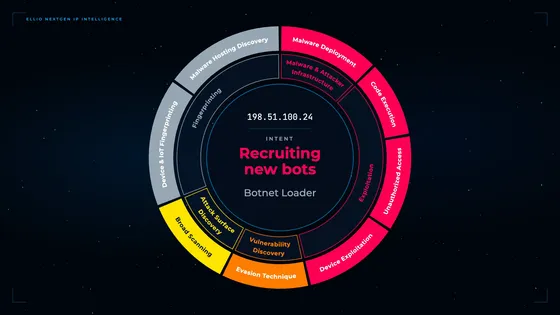
Look beyond the IP address, analyzing multiple fingerprints in real time across the full communication stack - from L3/L4 network and TCP signals to TLS and L7 behavior. Uncover technical patterns, connect activity driven by shared tooling, and separate meaningful relationships from coincidence. Understand who is behind an IP by analyzing how it communicates, not just where the traffic originates.
Connect the signals that IPs alone cannot.
Look beyond the IP address, analyzing multiple fingerprints in real time across the full communication stack - from L3/L4 network and TCP signals to TLS and L7 behavior. Uncover technical patterns, connect activity driven by shared tooling, and separate meaningful relationships from coincidence. Understand who is behind an IP by analyzing how it communicates, not just where the traffic originates.

When behavior leaves
a fingerprint, pay attention.
Each story starts with a single IP and leads to connections that an IP-based list can never reveal.
Fingerprints Reveals an Entire Malicious Network
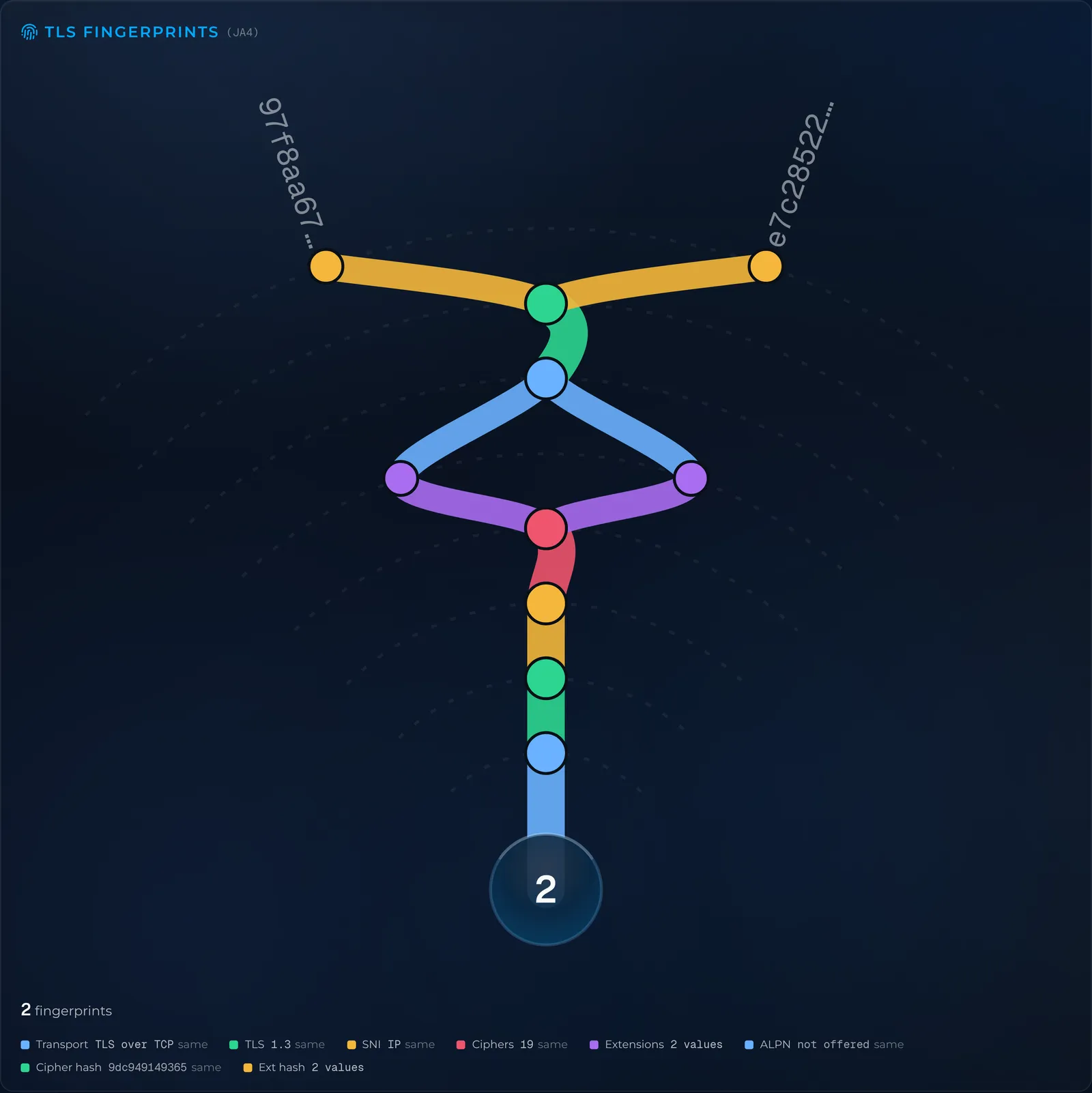
Two TLS fingerprints differed by just one extension. That tiny difference revealed the same fingerprint pair across 3,568 IPs, 84 networks, and 322 /24 ranges. More than 90% of those IPs were classified as malicious. The fingerprint connected infrastructure and turned thousands of scattered IPs into a single network of related infrastructure.
A Stable Signal Exposes Infrastructure Hiding Behind VPNs
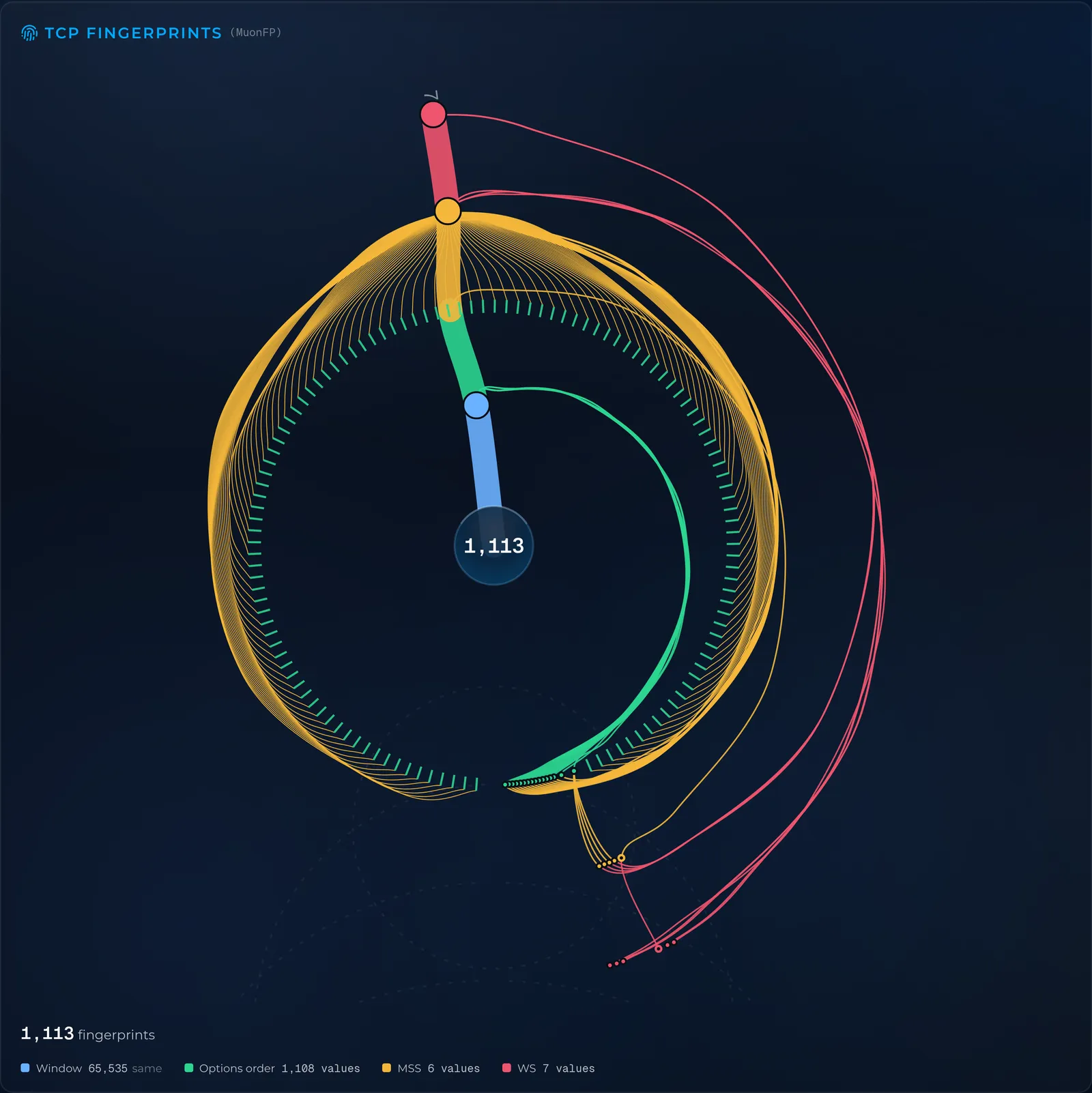
One IP produced 1,113 TCP fingerprints in three days, constantly changing its TCP options. Yet the segment size remained fixed at 1,436, a strong signal of traffic passing through a VPN tunnel. While the IP and fingerprint changed, this stable characteristic exposed the infrastructure underneath, revealing what the changing network identity was trying to hide.
Changing Fingerprints Don’t Mean Changing Identity
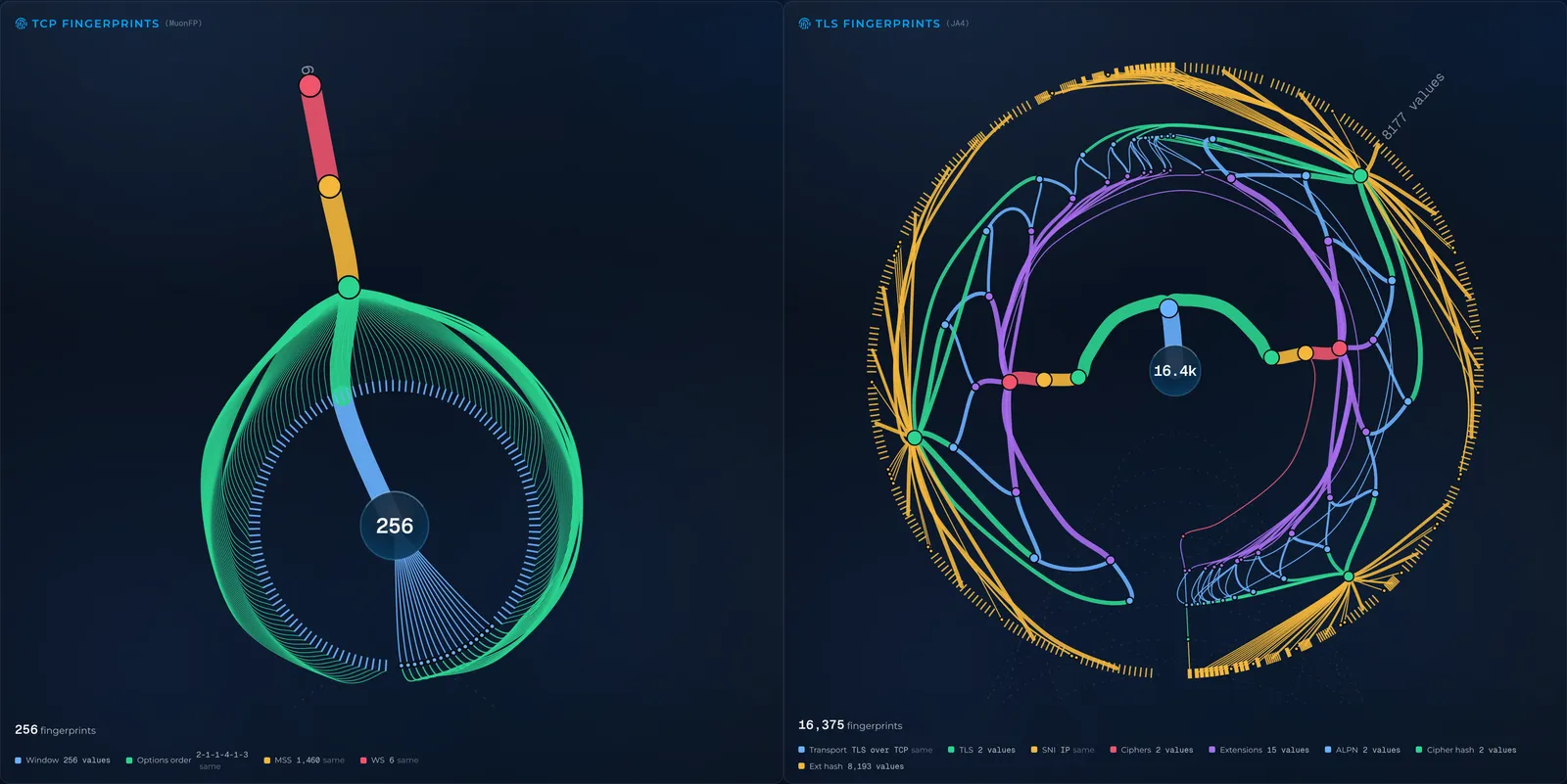
One address changed its network identity at both TCP and TLS layers. TCP window sizes varied across 256 values in exact 16-byte increments, while the TLS extension list changed into 8,193 distinct combinations. The source could change its network signature, but the fingerprint changes themselves became a signal, revealing deliberate evasion rather than thousands of unrelated identities.
Make your infrastructure hard to map.
Gain an extra layer of defense with ELLIO NullRecon, powered by fingerprint intelligence. Identify scanning tools by how they connect, not by IP address, and stop reconnaissance, scanning, and a subset of DDoS traffic before sessions reach your firewall, WAF, reverse proxy, or CDN edge. Reduce session load, inspection overhead, and downstream security noise.